Monday, February 2, 2015
Maryland and Delaware Soldiers on February 2, 1781 Crossing the Yadkin River
On February 2, 2015, the high temperature was 46 and the low was 29 degrees in the Greensboro North Carolina area. On February 2, 1781 when Maryland and Delaware soldiers crossed the Yadkin River in an attempt to escape from British General Cornwallis, I wonder what the temperature waslike. There are journals that can give us some clues. One is Robert Kirkwood's Journal and a second is William Seymour's "Journal of the Southern Expedition, 1780-1783."
Not only would the weather conditions be difficult, the tent life would be rough as well as foraging for food and having to walk 20-40 miles a day.
Saturday, December 13, 2014
Maryland Continental Soldiers at Valley Forge
During the encampment of Valley Forge in 1777-78, Marylanders were present. Another group of Marylanders encamped in Wilmington about 30 miles away.
This picture is one of my favorites. My shadow may appear to some as an accident but the tricorn hat that I was wearing adds an enormous effect of making the huts at Valley Forge come alive in the picture.
Monday, October 20, 2014
Index to 1776 Delmarva
Index to 1776 Delmarva:
Defending Delmarva During the American Revolution
•-Welcome to 1776 Delmarva •-New Castle •-Chincoteague’s Blanket Part in Washington Crossing the Delaware •-Delaware Continental Army Regiment •-St. Paul's Episcopal Church at Hebron, Maryland from 1773 Burned Down July 22, 2014 •-Maryland flag at same height as US flag because of Marylanders' sacrifice at the Battle of Brooklyn •-Wye Mills •-Churches of Delmarva During the American Revolution •-Chestertown Tea Party •-HMS Roebuck Visit to Parker Mill Pond Salisbury Maryland •-Rockawalkin Presbyterian Church from 1767What happened on the Delmarva Peninsula during the struggle for independence from Great Britain? Did the American Revolution affect the people of Delaware, Maryland and Virginia? This website will focus on happenings on the Eastern Shores of Maryland and Virginia and the State of Delaware. The contributions of the Western Shores of Maryland and Virginia has been documented quite well, this is an effort to show what happened on the Delmarva Peninsula and how its inhabitants reacted to the conflict. By no means will this exclude the western parts of Maryland and Virginia; they will be included greatly, it is just that the Delmarva Peninsula will be included in these studies. The Delmarva Peninsula played an important role; a neglected role.
Friday, September 26, 2014
New Castle
New Castle used to be the capital of Delaware but its location on the Delaware River proved to be too close for British navy ships to reach.
Monday, August 4, 2014
Chincoteague's Blanket Part in Washington Crossing the Delaware
Chincoteague's Part in Washington Crossing the Delaware
Once again the question needs to be asked, where would the cause for the independence of the United States be if it were not for the Delmarva Peninsula? The USS Independence sailed from Martinique with about 1000 muskets and 856 blankets. The soldiers had enough muskets but were dreadfully short of blankets. The Independence found itself pursued by a British frigate and found a safe haven in Chincoteague. It later eluded a British blockading squadron. The blankets arrived in the Continental Army camp near Washington Crossing on Christmas Eve, just in time. The troops marched with their blankets from "Washington Crossing" to Trenton, New Jersey.
Please use your imagination and picture this encampment area and the Delaware River in snow and ice.
The encampment area about 1/4 of a mile from Washington Crossing
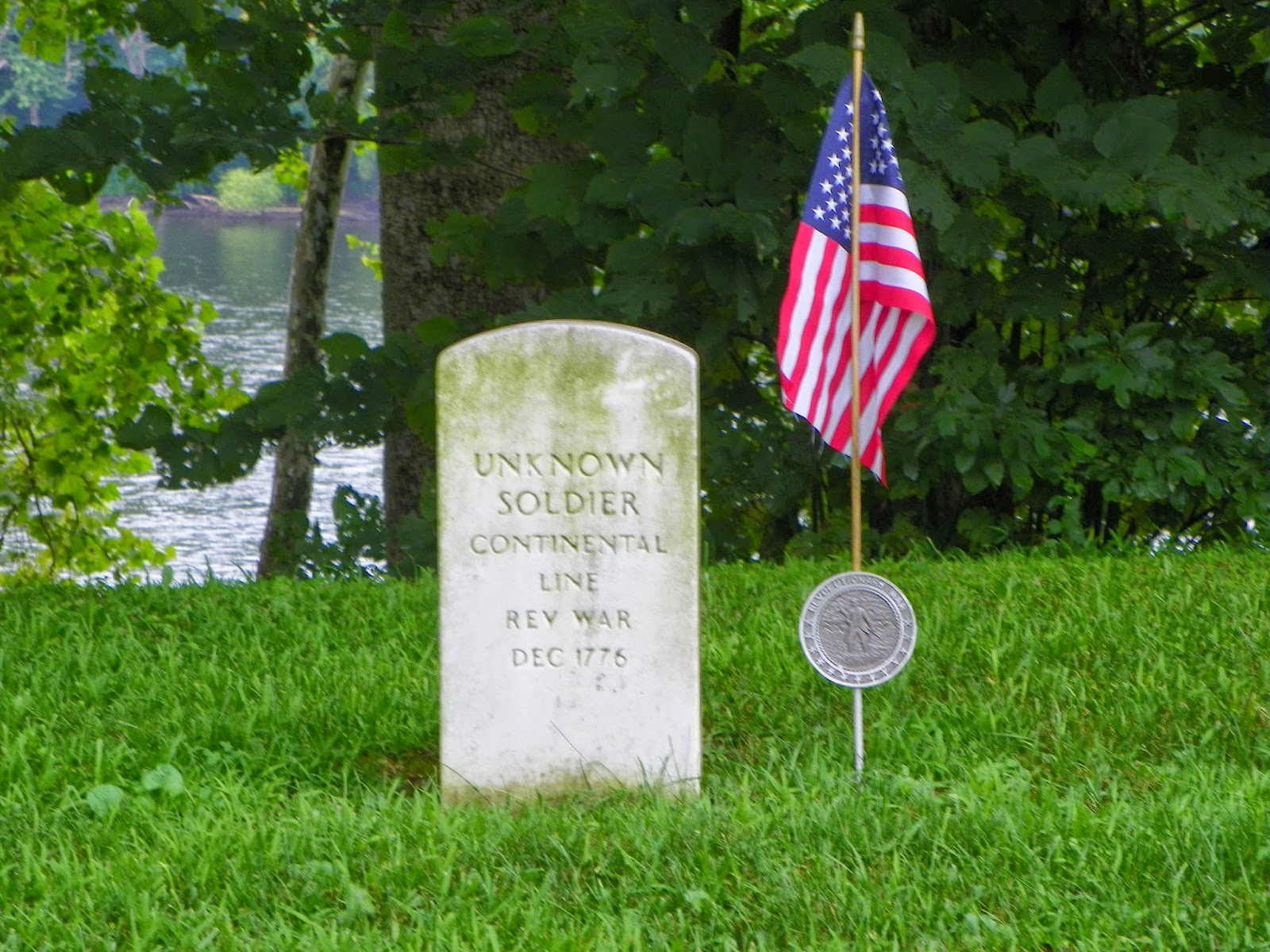
Tombstone of one of the 22 Unknown Soldiers That Died in the Encampment
Tombstone of Captain James Moore who died in Encampment at Washington Crossing
Tuesday, July 22, 2014
Subscribe to:
Posts (Atom)